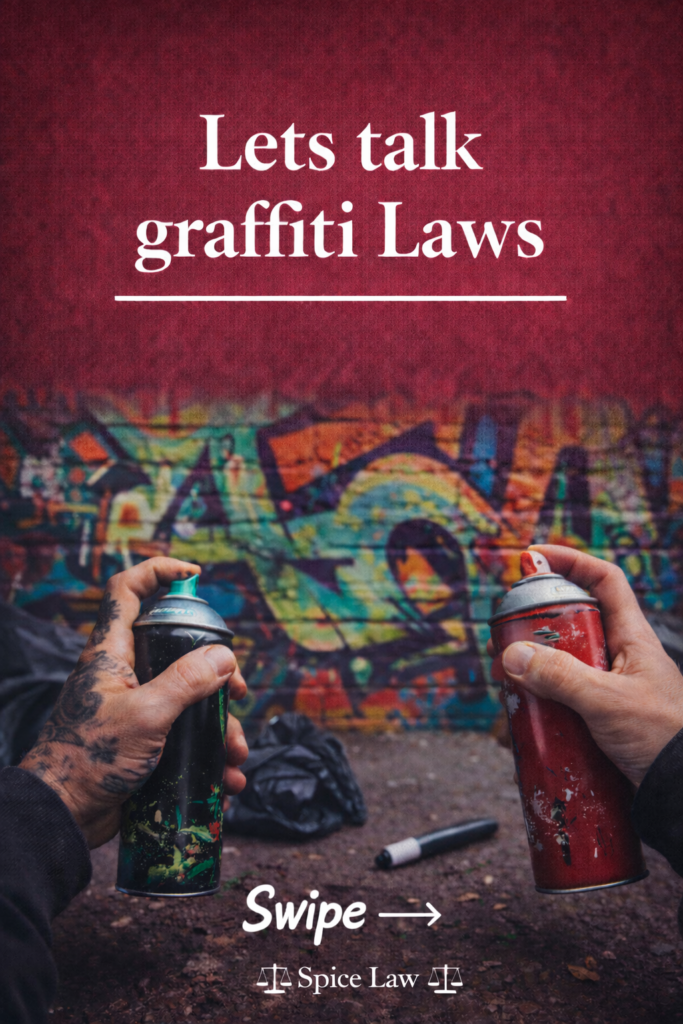
Let’s Talk Graffiti
Graffiti is often seen as a form of creativity and self-expression. Across the Northern Rivers and wider NSW, there are incredibly talented artists producing striking street art.
But legally speaking, there is a line between art and an offence.
If you’ve ever wondered what the law actually says about graffiti in NSW, here’s what you need to know.
What Does the Law Consider “Graffiti”?
In New South Wales, graffiti is mainly regulated by the Graffiti Control Act 2008 (NSW).
Under this legislation, graffiti generally means marking someone else’s property without permission. This can include a wide range of things such as:
- Spray paint
- Permanent markers
- Scratching or etching surfaces
- Stickers or posters
- Any other form of visible defacement
Importantly, the law focuses on whether the property owner gave permission.
If someone intentionally marks property without the owner’s consent, they may commit a graffiti offence under the Act.
Possession of “Graffiti Implements”
The law does not only deal with the act of graffiti itself.
Under the Graffiti Control Act 2008, it is also an offence to possess a graffiti implement in certain public places if the person intends to use it for graffiti.
A graffiti implement can include items such as:
- Spray paint cans
- Permanent markers
- Etching tools
- Any object capable of marking a surface
Intent is important here. Simply carrying a marker is not automatically illegal — however, if police believe it is intended for graffiti, a charge may follow.
Graffiti and Malicious Damage
In some circumstances, graffiti can also fall under the Crimes Act 1900 (NSW) as malicious damage.
This may occur when graffiti:
- Causes damage to property, or
- Requires significant cost to clean or repair.
Penalties can vary depending on the seriousness of the damage and the circumstances of the offence.
What About Chalk on the Footpath?
A common question people ask is:
“Surely chalk doesn’t count as graffiti?”
While chalk may seem harmless because it washes away, it can still legally fall within the definition of marking property without permission.
Writing or drawing on:
- Footpaths
- Roads
- Public infrastructure
- Council property
may still attract attention under the Graffiti Control Act 2008 (NSW).
In some cases, local councils may also rely on the Local Government Act 1993 (NSW) if markings interfere with public property or require removal.
The key issue again comes down to permission.
Are There Legal Places to Create Graffiti?
Graffiti can be completely legal if you have permission from the property owner.
Many councils across NSW also run:
- Legal graffiti walls
- Street art programs
- Commissioned mural projects
These programs support artists while ensuring property owners and councils consent to the artwork.
The Northern Rivers Has Incredible Talent
Here in the Northern Rivers, we see a lot of incredible creativity, skill and artistic expression in the local graffiti and street art community.
Graffiti can be powerful art — as long as you have permission to create it where you are painting.
Charged With a Graffiti Offence?
Sometimes the line between permission and unlawful graffiti can feel blurred.
If you have been charged with a graffiti offence in NSW, it’s important to understand your legal options and the potential consequences.
If you need advice or representation, feel free to contact our team.
We’re here to help.